

Posted by nuréo Skincare
on October 21, 2026
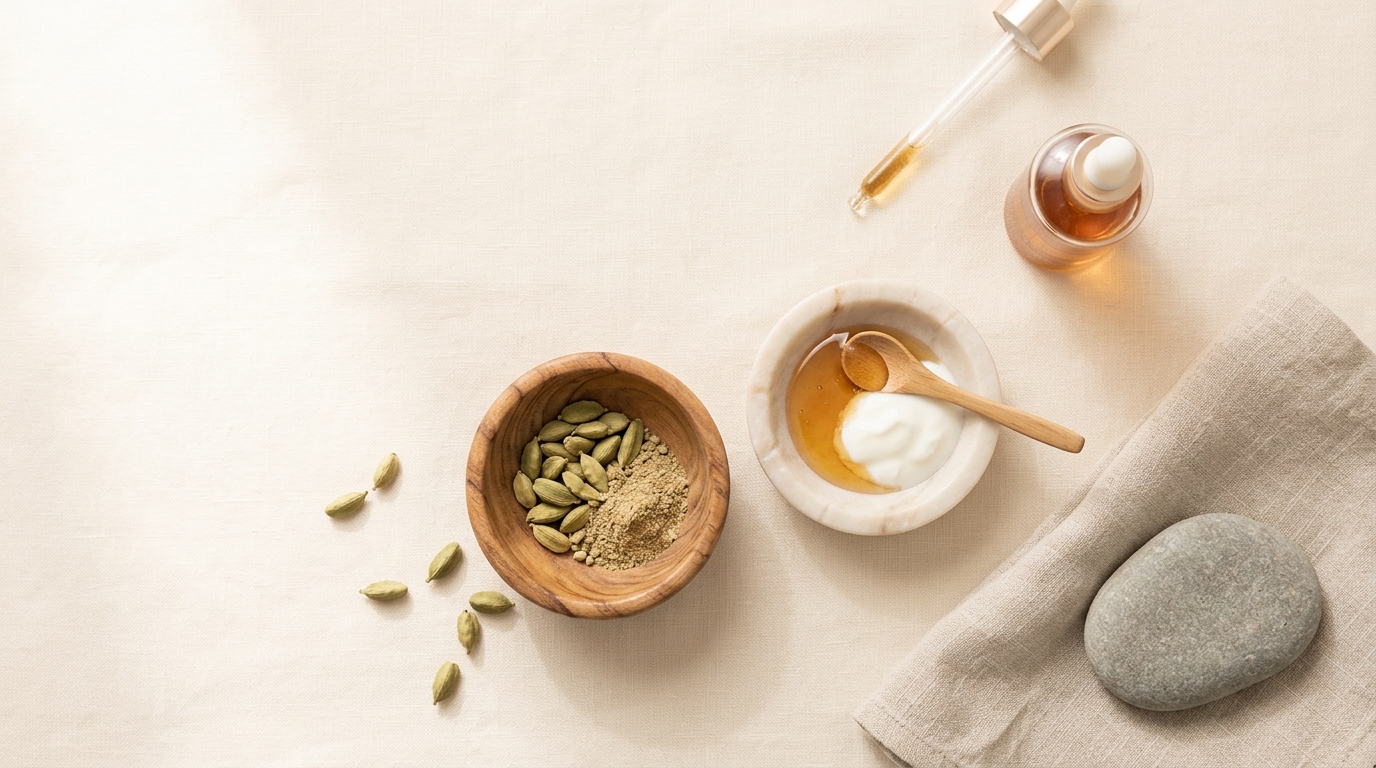
Cardamom cannot whiten skin the way bleaching agents or hydroquinone do, but ground cardamom seeds mixed with honey, yogurt, or rosewater and used as a weekly face mask can gently exfoliate, reduce surface dullness, and support a more even-looking tone over time thanks to its antioxidant content and mild astringent effect.
If you searched for how to use cardamom for skin whitening, you're likely dealing with dullness, uneven patches, or post-sun discoloration rather than wanting to literally change your skin's melanin production. That distinction matters, because the skincare industry has built an entire mythology around spice masks "whitening" skin, and it sets people up to expect results that no kitchen ingredient can deliver.
Does cardamom actually whiten skin, or is that a myth?
Cardamom (Elettaria cardamomum) contains cineole, terpinene, and limonene, along with flavonoid antioxidants. These compounds have mild anti-inflammatory and antimicrobial properties, which is why cardamom has a long history in Ayurvedic skin pastes.
None of these compounds inhibit tyrosinase, the enzyme responsible for melanin production, which is the actual mechanism behind real skin lightening ingredients like kojic acid or arbutin. So cardamom doesn't whiten skin at a cellular level. What it can do is slough off dead surface cells and reduce puffiness, which makes skin look brighter and more even in the mirror, even though pigment levels haven't changed.
How to use cardamom for skin whitening (realistic mask recipes)
If you want to try cardamom for a brightening effect, here's how to do it properly rather than just rubbing pods on your face:
- Grind 4-5 green cardamom pods into a fine powder using a mortar and pestle or spice grinder.
- Mix the powder with 1 tablespoon of raw honey (a humectant) and 1 teaspoon of plain yogurt (lactic acid, a gentle AHA).
- Apply to clean, dry skin in a thin layer, avoiding the eye area.
- Leave on for 10-12 minutes, no longer, since cardamom's volatile oils can irritate skin if left too long.
- Rinse with lukewarm water and follow immediately with a hydrating moisturizer.
Use this mask once or twice a week at most. Daily use will likely cause dryness and irritation rather than faster results, since you're essentially layering a mild exfoliant on top of skin that needs time to regenerate.
What ingredients actually brighten and even skin tone?
If cardamom alone isn't giving you the dramatic lightening you're after, that's expected. Here's how it stacks up against ingredients that have actual research behind pigment reduction.
| Ingredient | Mechanism | Evidence level | Best for |
|---|---|---|---|
| Cardamom powder | Mild exfoliation, antioxidant, no tyrosinase inhibition | Traditional use, limited clinical data | Surface dullness, texture |
| Vitamin C (ascorbic acid) | Inhibits tyrosinase, neutralizes free radicals | Well-studied for tone evenness | Dark spots, sun damage, overall radiance |
| Kojic acid | Chelates copper needed for tyrosinase activity | Clinically supported, can irritate | Stubborn hyperpigmentation |
| Licorice root extract | Inhibits tyrosinase via glabridin | Moderate clinical support | Sensitive skin, gentle brightening |
Vitamin C is the one ingredient on this list with the strongest combination of research support and accessibility, which is why a serum like Radiant Boost Vitamin C Serum tends to outperform a cardamom paste for people actually trying to fade dark spots rather than just refresh dull skin. We've broken down the science further in our piece on vitamin C serum and dark spots if you want the full mechanism.
Can you combine cardamom with other brightening ingredients?
Yes, and this is where cardamom earns its place in a routine rather than as a standalone miracle. Use cardamom masks as an occasional exfoliating step, then follow up on non-mask days with a leave-on product that has real tyrosinase-inhibiting activity.
- Cleanse first with a gentle, sulfate-free formula like FoamCleanse: Gentle Daily Face Wash so you're not stripping skin before applying actives.
- Apply cardamom mask 1-2x weekly for texture and surface brightness.
- On other days, use a vitamin C serum in the morning for antioxidant protection and gradual tone correction.
- Layer a moisturizer with niacinamide or peptides at night to support barrier repair, since over-exfoliated skin produces more pigment as a stress response, not less.
For a deeper look at cardamom's broader skin benefits beyond brightening, including its role in calming irritation and supporting barrier health, see our full guide to cardamom for skin.
Are there risks to using cardamom on your face?
Cardamom essential oil and powder can be irritating in concentrated form, particularly for people with sensitive or reactive skin. The volatile compounds that give cardamom its scent are the same ones that can cause stinging or redness if the mask sits too long or the powder isn't diluted enough.
Always patch test on your inner arm for 24 hours before applying any new spice mask to your face. If you notice tingling that doesn't fade within a minute or two of application, rinse immediately and skip that ingredient going forward.
FAQ
How long does it take to see results from a cardamom face mask?
Most people notice a temporary brightness and smoother texture immediately after rinsing, due to exfoliation and increased blood flow. Any lasting change in tone evenness would require weeks of consistent use alongside ingredients with actual tyrosinase-inhibiting activity, like vitamin C.
Can cardamom remove dark spots or hyperpigmentation?
Cardamom has not been shown to reduce melanin production, so it's unlikely to fade existing dark spots on its own. For dark spot correction, ingredients like vitamin C, kojic acid, or licorice root extract have stronger research behind them.
Is cardamom safe to use on sensitive skin?
Cardamom's volatile oils can irritate sensitive or compromised skin barriers, so always patch test first and limit mask time to under 15 minutes. Those with eczema, rosacea, or active breakouts should generally avoid spice-based masks altogether.
What's the difference between skin whitening and skin brightening?
Skin whitening typically refers to reducing melanin production to lighten overall skin tone, while brightening refers to improving radiance, texture, and evenness without changing baseline pigment. Cardamom falls into the brightening category, not whitening.
Should I use cardamom powder or cardamom essential oil on my face?
Ground cardamom powder mixed into a mask base is gentler and easier to dilute than essential oil, which is highly concentrated and more likely to cause irritation if applied undiluted. For beginners, start with powder in a mask rather than oil applied directly.
