

Posted by nuréo Skincare
on October 07, 2026
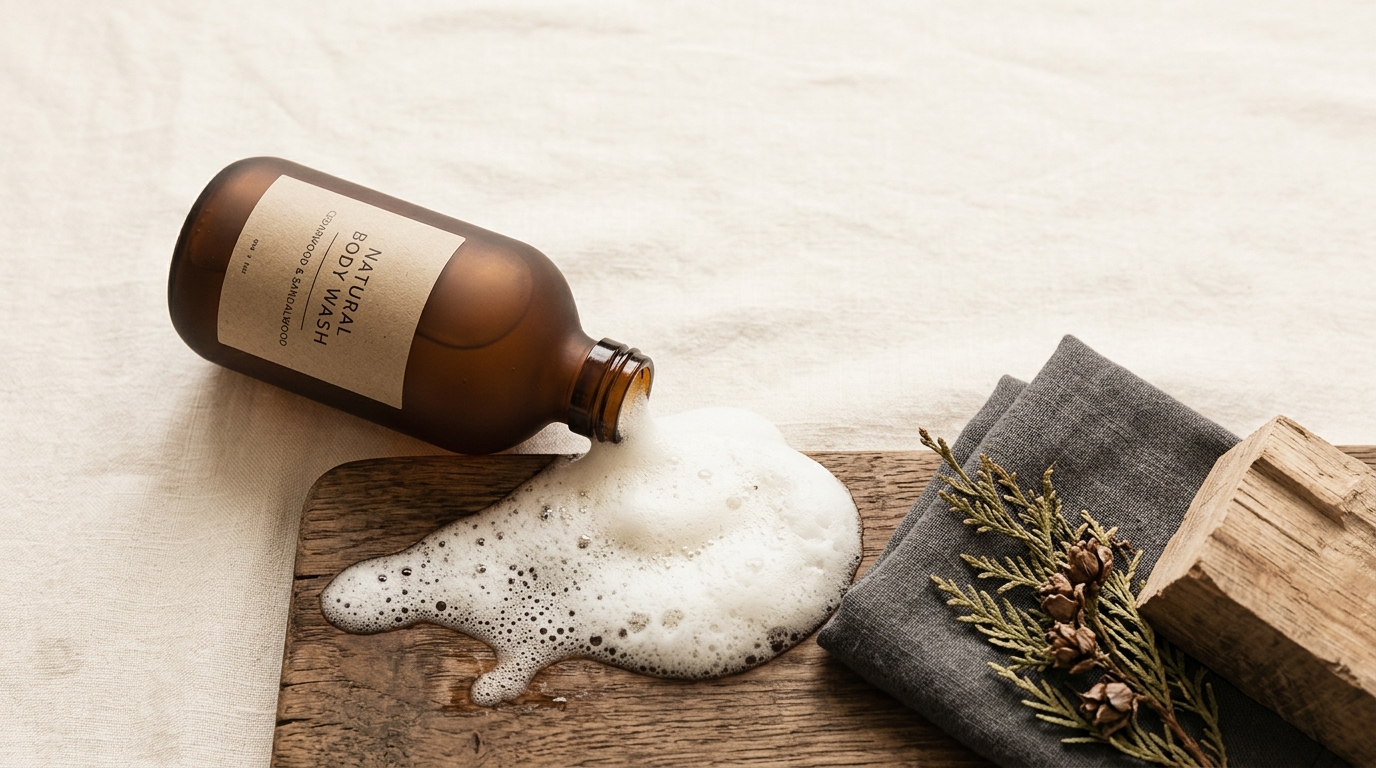
Yes, natural men's body wash can absolutely lather well. The key is looking for plant-derived surfactants like sodium coco sulfate, decyl glucoside, or coco betaine, which build rich, dense foam without the skin-stripping harshness of sodium lauryl sulfate (SLS) found in most drugstore formulas. The myth that "natural" means "watery and useless" comes from early-generation clean formulas that under-dosed surfactants. That's no longer the case.
If you've searched for this before and landed on vague blog posts that never actually answer the question, you're not alone. This is a real gap: plenty of guys assume they have to choose between a satisfying lather and a formula that won't dry out or irritate their skin. You don't.
Why did older natural body washes lather so poorly?
Early clean-beauty formulas leaned on very mild surfactants like decyl glucoside alone, at low concentrations, to avoid any hint of irritation. Foam density is directly tied to surfactant concentration and molecular structure, so under-dosed formulas simply couldn't generate the same bubble structure as an SLS-based wash.
Foam isn't just cosmetic theater either. A denser lather spreads product more evenly across skin and hair follicles, which matters if you're washing off sweat, sunscreen, or a day's worth of grime. The good news is formulators have since figured out how to combine several gentle surfactants together to hit that lather target without going back to sulfates.
Which natural surfactants actually foam well?
Not all plant-derived cleansers are created equal when it comes to bubble structure. Here's what to look for on an ingredient list, ranked roughly by foaming strength:
- Sodium coco sulfate (SCS): Derived from coconut oil, chemically similar to SLS but with a larger molecular structure that's gentler on the skin barrier while still producing a thick, creamy lather.
- Cocamidopropyl betaine: A coconut-derived amphoteric surfactant that boosts foam volume and stabilizes bubbles when paired with a primary cleanser.
- Decyl glucoside: Made from corn starch and coconut, very mild, moderate foam on its own but works well as a co-surfactant.
- Sodium cocoyl isethionate: Common in bar soaps, produces a silky, dense lather with low irritation potential.
The trick is combination. A well-formulated natural wash typically blends two or three of these rather than relying on just one, which is exactly how you get both foam and mildness in the same bottle.
How does a natural lather compare to a sulfate-based one?
| Factor | SLS-based wash | Coco-sulfate blend (natural) |
|---|---|---|
| Foam density | Very high | High |
| Skin barrier impact | Can strip natural lipids with daily use | Milder, less transepidermal water loss |
| Irritation risk | Higher, especially for sensitive/keratosis pilaris-prone skin | Lower |
| Rinse-off feel | Squeaky clean, sometimes tight | Clean without tightness |
| Biodegradability | Slower | Faster |
If you have naturally oily skin or work an active job with heavy sweat and grime, an SLS wash might rinse debris slightly faster. But for daily use, especially over months and years, the coco-sulfate and betaine blends hold up better for skin barrier health without a meaningful drop in cleaning power.
What should you check on the label before buying?
Ignore front-of-bottle marketing words like "natural" or "gentle," since neither term is regulated. Instead, scan the actual ingredient list for these signals:
- Look for a surfactant blend near the top (usually the 2nd-4th ingredient), not just water followed by a single cleanser diluted way down.
- Check for coconut-derived names: sodium coco sulfate, cocamidopropyl betaine, coco glucoside.
- Avoid parabens, synthetic fragrance blends listed simply as "fragrance," and PEG compounds if you're trying to stay closer to clean formulation standards.
- Favor washes with essential oil-based scent systems (cedarwood, amber, spice notes) rather than synthetic fragrance, which also tend to be gentler on sensitized skin.
Our Fresh Cedar Wash for Hands & Body is formulated exactly this way, using a coconut-derived surfactant blend for a genuinely thick lather, layered with real cedarwood and cedar leaf oil rather than a synthetic "woodsy" fragrance accord. If you prefer something warmer and spicier for cooler months, the Spice Cleanse Hand & Body Wash uses a similar surfactant approach with cardamom and clove notes.
Does more lather actually mean a better clean?
Not necessarily, and this is where a lot of marketing gets misleading. Foam is a function of surfactant chemistry and air incorporation, not proof of cleansing efficacy. A wash can produce moderate foam and still fully emulsify oil, dirt, and sweat off skin.
That said, from a purely behavioral standpoint, most people rinse longer and more thoroughly when a product lathers well, since it gives clear visual feedback that the product is spreading. So while lather isn't a scientific requirement for cleanliness, it does serve a real functional purpose in how thoroughly people wash.
How do you build lather with a natural formula for the best result?
- Wet skin fully before applying, water activates surfactants faster than trying to lather on dry skin.
- Use a small amount (dime to quarter size) worked between wet palms first, rather than pouring directly onto a loofah.
- Use a textured washcloth, loofah, or silicone body brush to mechanically incorporate air, this alone can double perceived foam volume.
- Rinse with lukewarm rather than hot water, since hot water can break down surfactant structure faster and leave skin feeling tighter afterward.
If you're building out a fuller routine and want to understand what else to avoid in body care, our guide on body wash ingredients to avoid breaks down the specific red-flag additives worth skipping. And if you're curious how sulfate-free formulas hold up long-term, we cover that in detail in why sulfate-free body wash is better for your skin.
FAQ
Can a sulfate-free body wash lather as much as a regular one?
Yes, when formulated with a blend of coconut-derived surfactants like sodium coco sulfate and cocamidopropyl betaine, sulfate-free washes can generate nearly the same foam volume as SLS-based products. The lather may feel slightly less dense but rinses just as cleanly.
Is sodium coco sulfate the same as SLS?
No. They're chemically related since both derive from coconut or palm oils, but sodium coco sulfate has a broader, larger molecular weight distribution that makes it milder on the skin barrier while still producing strong foam.
Why does my natural body wash feel less foamy in hard water?
Hard water contains calcium and magnesium ions that bind to surfactant molecules and reduce foam formation, this affects both natural and conventional washes but tends to be more noticeable with milder surfactant blends. A water softener or slightly larger product amount can help offset this.
What's the best natural body wash for men with sensitive skin who still want lather?
Look for formulas combining decyl glucoside with cocamidopropyl betaine and a small amount of sodium coco sulfate, which balances mildness with foam. Fragrance-free or essential-oil-scented versions further reduce irritation risk for reactive skin.
Do natural body washes clean as effectively as ones with sulfates?
Yes, for typical daily grime, sweat, and product buildup, coconut-derived surfactant blends emulsify and rinse away oils just as effectively as SLS. The main difference shows up over time in skin barrier health, not in a single wash's immediate cleaning power.
