

Posted by nuréo Skincare
on August 05, 2026
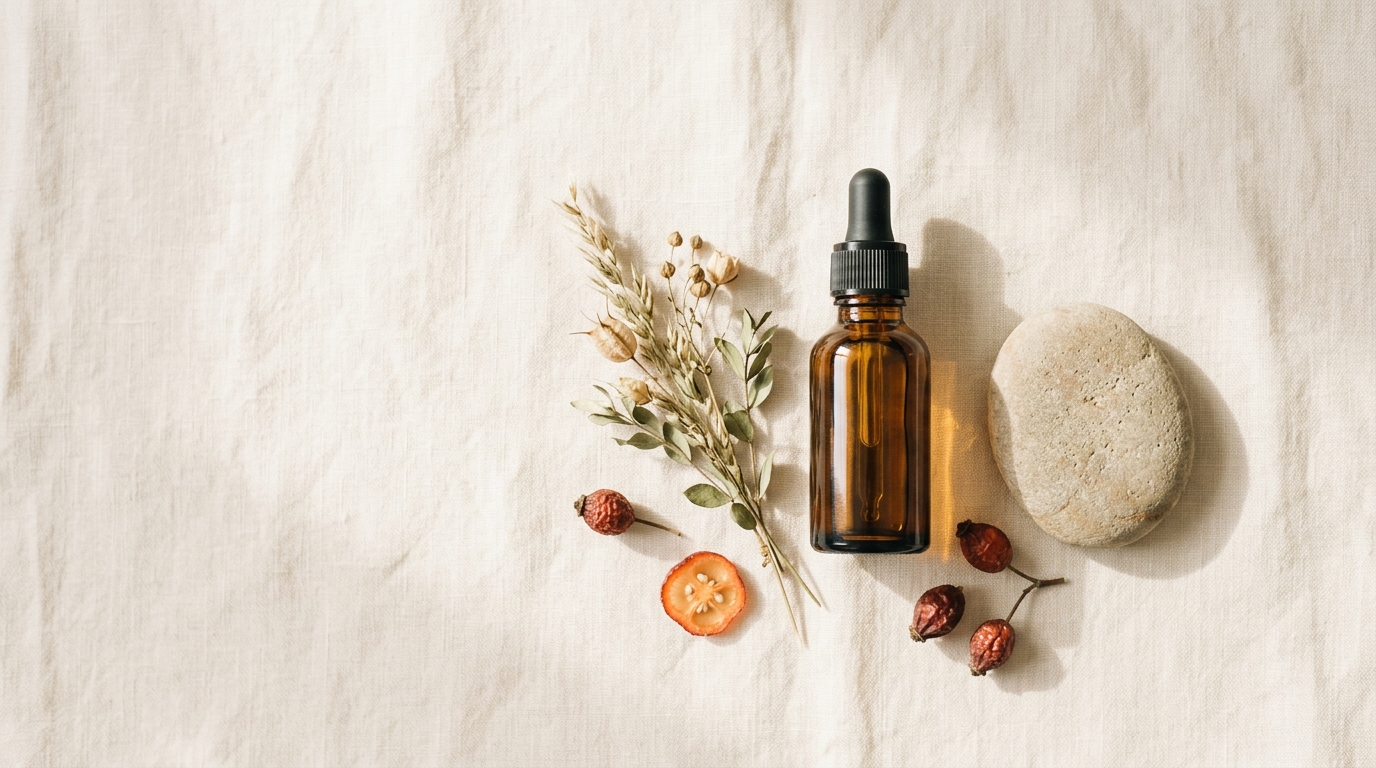
The best natural retinol alternatives for sensitive skin are bakuchiol, rosehip oil, sea buckthorn oil, vitamin C, and peptides. Each supports collagen production or cell turnover through a different mechanism than retinol, so they deliver gradual firming and brightening without the dryness, redness, or photosensitivity that retinoids can cause.
Retinol is still the gold standard for reversing deep wrinkles fast. But its mechanism, forcing rapid skin cell turnover by binding directly to retinoic acid receptors, is exactly what makes it so irritating for reactive skin types. If you've tried retinol and ended up with a peeling, stinging face, you're not doing it wrong. Your skin barrier is just telling you something useful.
How is retinol different from natural alternatives?
Retinol converts to retinoic acid inside the skin, then binds to nuclear retinoic acid receptors (RAR/RXR) that control gene expression for collagen synthesis and cell shedding. This is a powerful, direct mechanism, which is why it works quickly on fine lines and acne. It's also why 'retinization', the dryness, flaking, and stinging that happens in the first weeks, is so common.
Natural alternatives work through gentler, more indirect pathways: some mimic retinoid activity without full receptor binding, others support collagen through antioxidant or signaling routes instead of forcing cell turnover. The trade-off is honest: slower, subtler results in exchange for a barrier that stays intact.
What is bakuchiol and how does it work as a retinol alternative?
Bakuchiol is a meroterpenoid extracted from the seeds and leaves of Psoralea corylifolia. Structurally it looks nothing like vitamin A, but research suggests it upregulates the same collagen-related genes (types I and III) that retinoids target, likely through partial interaction with retinoic acid receptor pathways.
A widely cited 2014 study (Chaudhuri & Bojanowski) compared 0.5% bakuchiol twice daily against 0.5% retinol nightly over 12 weeks. Wrinkle reduction and pigmentation improvements were comparable between groups, but the bakuchiol group reported significantly less scaling and stinging. It's the closest thing to a like-for-like natural swap currently studied.
Our Natural Retinol Alternative Oil Serum uses bakuchiol as its anchor ingredient, paired with rosehip and sea buckthorn oils for barrier support during the adjustment period.
Can rosehip oil replace retinol?
Rosehip oil (from Rosa canina or Rosa moschata seeds) contains trace amounts of naturally occurring tretinoin-like compounds alongside high concentrations of linoleic acid and beta-carotene, a vitamin A precursor. This gives it mild, genuine retinoid activity, just far weaker and slower than isolated retinol.
Where rosehip oil pulls ahead is barrier repair. Its linoleic acid content helps rebuild the lipid matrix between skin cells, which is exactly what gets stripped by aggressive retinoid use. It works well layered under a bakuchiol serum, or on its own for skin that reacts to almost everything.
What does sea buckthorn oil do for aging skin?
Sea buckthorn oil (Hippophae rhamnoides) is unusually rich in palmitoleic acid, an omega-7 fatty acid that closely resembles the lipids naturally found in human sebum. This makes it exceptionally well tolerated, even on compromised or eczema-prone skin.
Its carotenoid and tocopherol content provide antioxidant protection against the UV and pollution damage that accelerates collagen breakdown. Sea buckthorn isn't a retinoid mimic like bakuchiol; it earns its place in this list as a regenerative, barrier-first support ingredient that pairs well with more active options.
Is vitamin C a retinol alternative?
Not structurally, but functionally it addresses similar aging concerns through a completely different pathway. Ascorbic acid (and gentler derivatives like sodium ascorbyl phosphate) acts as a required cofactor for the enzymes prolyl and lysyl hydroxylase, which physically stabilize collagen's triple-helix structure. No vitamin C, no properly formed collagen, regardless of how much retinol you're using.
Vitamin C also inhibits tyrosinase, the enzyme responsible for excess melanin production, making it the better choice specifically for sun spots and post-inflammatory pigmentation. For a deeper look at what the research shows on this front, see our post on vitamin C serum results for dark spots. Our Radiant Boost Vitamin C Serum is formulated to layer alongside bakuchiol without destabilizing either ingredient.
Do peptides work as well as retinol?
Peptides are short chains of amino acids that act as signaling molecules rather than receptor agonists. Palmitoyl pentapeptide-4 (Matrixyl) and copper peptides (GHK-Cu) tell fibroblasts to behave as though a wound has occurred, triggering collagen and elastin synthesis without any of the exfoliative irritation retinol causes.
Peptides are slower than retinol and slower than bakuchiol, often requiring 8 to 12 weeks of consistent use before visible firming shows up. They're also the gentlest option on this list, genuinely usable on skin that can't tolerate any actives at all. If you're new to peptides, our beginner's guide to peptides breaks down the different types, and our 30-day peptide serum results post shows what realistic timelines look like. The Peptide Youth Boost Serum is formulated for exactly this slow-build approach.
Natural retinol alternatives compared
| Ingredient | Mechanism | Potency vs retinol | Best for |
|---|---|---|---|
| Bakuchiol | Partial retinoid receptor activity | Close, ~70-80% comparable in studies | Sensitive skin wanting real retinoid-like results |
| Rosehip oil | Trace natural retinoids + linoleic acid | Mild | Barrier repair, dry or reactive skin |
| Sea buckthorn oil | Omega-7 lipids + antioxidants | Low (supportive, not active) | Compromised barrier, eczema-prone skin |
| Vitamin C | Collagen cofactor + tyrosinase inhibition | Different pathway, not comparable | Pigmentation, dullness, sun damage |
| Peptides | Fibroblast signaling | Low-moderate, slow build | Very reactive skin, long-term maintenance |
Who should choose natural alternatives over retinol?
- Sensitive or reactive skin types, including rosacea and eczema-prone skin that flares with exfoliating actives.
- Pregnant or breastfeeding individuals, since retinoids are contraindicated in pregnancy while bakuchiol, vitamin C, and peptides carry no such warning.
- Retinol beginners who want to build tolerance gradually rather than starting with full-strength irritation.
- Deeper skin tones prone to post-inflammatory hyperpigmentation, where retinoid irritation itself can trigger new dark spots.
If you're still weighing which route makes sense for your specific skin, our detailed retinol vs. natural alternatives comparison walks through the decision in more depth. For a minimal routine that layers these ingredients correctly, see our 3-step skinimalism routine.
How to build a natural retinol-alternative routine
- Morning: Vitamin C serum, then SPF. Vitamin C's antioxidant protection is most useful earlier in the day.
- Evening: Cleanse, then apply a bakuchiol-based serum 3-4 nights a week to start, increasing to nightly as tolerated.
- Nights off from bakuchiol: Use a peptide serum instead to keep signaling collagen production without any risk of irritation.
- Anytime skin feels reactive: Layer rosehip or sea buckthorn oil alone to calm and rebuild the barrier before reintroducing actives.
FAQ
Is bakuchiol as effective as retinol for wrinkles?
Research comparing 0.5% bakuchiol to 0.5% retinol found similar improvements in wrinkle depth and pigmentation over 12 weeks, with significantly less irritation in the bakuchiol group. It's the closest natural match currently studied, though most experts still consider retinol somewhat more potent for deep, established wrinkles.
Can I use rosehip oil and vitamin C together?
Yes. Vitamin C works best in the morning under SPF, while rosehip oil is better suited to evening use since it's more barrier-supportive than photoprotective. Using both simply targets different times of day and different mechanisms.
Are natural retinol alternatives safe during pregnancy?
Bakuchiol, vitamin C, peptides, rosehip oil, and sea buckthorn oil are all generally considered pregnancy-safe, unlike retinoids which are contraindicated. Always confirm with your OB-GYN before adding any new active ingredient during pregnancy.
How long until I see results from natural retinol alternatives?
Bakuchiol typically shows visible changes within 8 to 12 weeks of consistent use, similar to retinol's timeline. Peptides and sea buckthorn oil work more gradually and often take 10 to 16 weeks for noticeable firming.
Do I need to use sunscreen with natural retinol alternatives?
Yes, always. Unlike retinol, these ingredients don't cause photosensitivity, but daily SPF is still essential for preventing the UV damage that accelerates collagen breakdown in the first place.
