

Posted by nuréo Skincare
on August 12, 2026
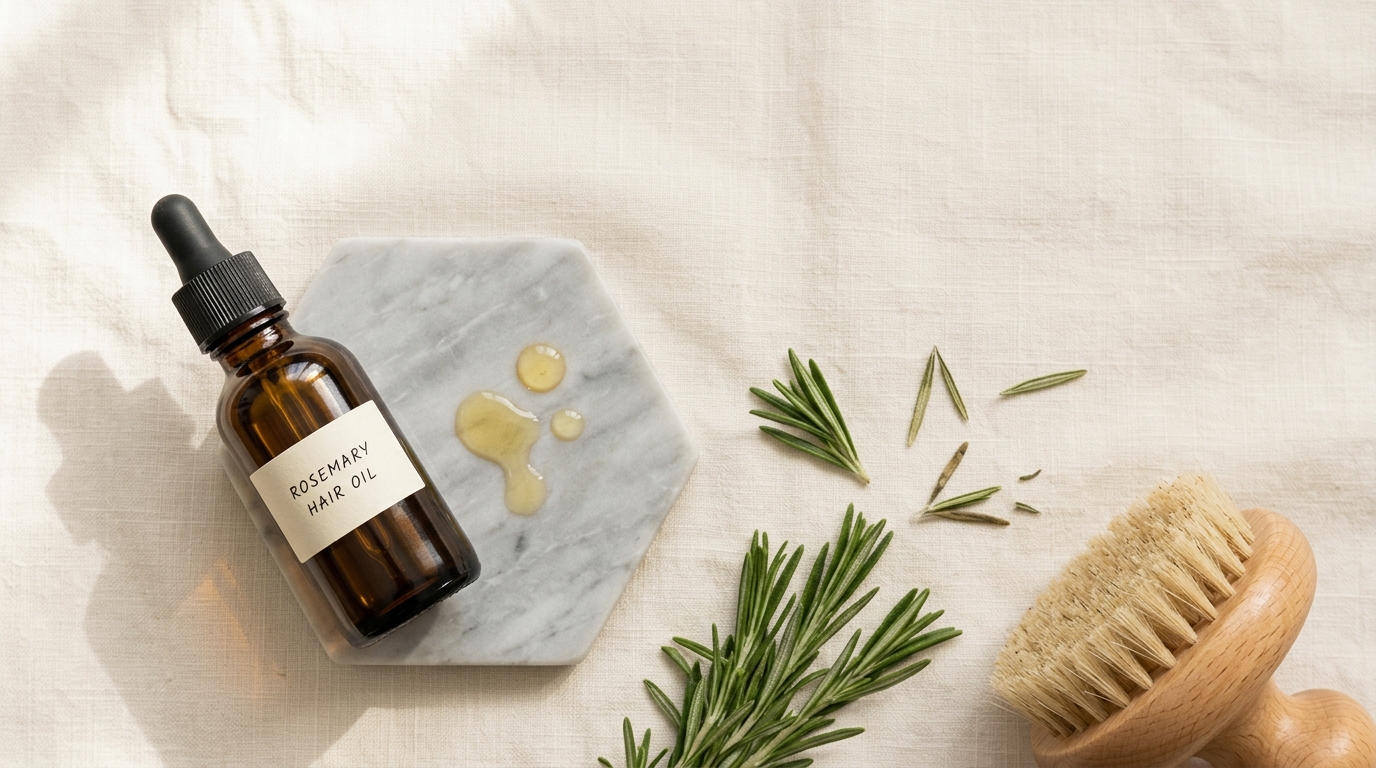
The rosemary oil scalp massage routine that actually works involves diluting rosemary essential oil to 2-3% in a carrier oil, massaging into the scalp with firm circular pressure for 5-10 minutes, leaving it on for at least 1-2 hours (or overnight), and repeating 2-3 times per week for 8-12 weeks before expecting visible results.
That's the short version. But most people get this wrong in ways that either waste the oil's potential or irritate their scalp. Here's the routine done correctly, with the reasoning behind every step.
Why does massage matter as much as the oil itself?
Rosemary oil (from Rosmarinus officinalis, botanically reclassified as Salvia rosmarinus) contains carnosic acid and rosmarinic acid, compounds researched for their antioxidant and anti-inflammatory activity at the follicle level. But the oil is only half the mechanism.
Manual scalp massage independently increases blood flow to hair follicles. A small but frequently cited 2016 Japanese study found that 4 minutes of daily scalp massage over 24 weeks measurably increased hair thickness, separate from any topical product. Massage also appears to mechanically stretch the dermal papilla cells, which may upregulate genes associated with hair growth.
Put the two together, rosemary's biochemical activity plus massage-induced circulation, and you get a routine that works on two separate pathways at once. Skipping the massage and just dabbing oil on your scalp leaves half the benefit on the table.
What's the science behind rosemary oil and DHT?
Dihydrotestosterone (DHT) is the androgen responsible for shrinking hair follicles in androgenetic alopecia. Rosemary oil doesn't block DHT the way a pharmaceutical like finasteride does, but early research (including a frequently referenced 2015 comparative trial) suggests topical rosemary may produce hair count improvements comparable to 2% minoxidil over 6 months, with less scalp itching reported.
The proposed mechanism involves carnosic acid's effect on nerve growth factor and circulation, rather than direct hormonal blocking. Be honest with yourself about expectations here: rosemary oil is a supportive, lower-risk option for thinning hair, not a replacement for medical treatment if you have diagnosed pattern hair loss. If you're seeing rapid or patchy loss, see a dermatologist first.
Step-by-step: the correct rosemary oil scalp massage routine
Step 1: Dilute properly
Pure rosemary essential oil is too concentrated to apply directly to skin. It should be diluted to roughly 2-3% in a carrier oil, that's about 4-6 drops of essential oil per tablespoon of carrier (jojoba, argan, or sweet almond oil work well because they closely mimic sebum's fatty acid profile).
Pre-formulated blends solve the measuring guesswork. The Rosemary Hair & Scalp Strengthening Oil is already diluted to a scalp-safe concentration in nourishing carrier oils, so you can skip the DIY math and go straight to application.
Step 2: Section and apply
Part hair into 4-6 sections. Apply the oil directly to the scalp, not just the hair shaft, using a dropper or the bottle's applicator tip. You want the oil touching skin, since that's where the follicles and blood vessels are.
Step 3: Massage with the right pressure and pattern
- Use fingertips (not nails) in slow, circular motions
- Apply firm, deliberate pressure, similar to a facial massage, not a scratch
- Work systematically from the front hairline to the crown, then down to the nape
- Massage for 5-10 minutes total
A silicone scalp massager can help maintain consistent pressure if your hands tire, but fingertips give you better feedback on tension and tender spots.
Step 4: Leave it on, but not indefinitely
Leave the oil on for at least 30-60 minutes for casual use, or 1-2 hours (even overnight with a towel on your pillow) for deeper treatment. Rinsing immediately after massaging, a very common mistake, doesn't give the actives or the carrier oil time to actually penetrate and condition the follicle and surrounding skin.
Step 5: Wash out thoroughly
Use a gentle, sulfate-free shampoo to fully remove the oil; residual oil buildup can weigh hair down or attract dirt to the scalp. This is also a good moment to work in a scalp exfoliation step periodically. Our rosemary scalp scrub guide covers how to clear follicle-clogging buildup that can blunt the massage routine's effectiveness.
How often should you do this?
2-3 times per week is the evidence-informed sweet spot. Daily use isn't necessarily better and can increase the risk of scalp irritation or contact dermatitis, especially with a poorly diluted oil. Consistency over 8-12 weeks matters more than frequency; hair growth cycles are slow, and follicles need sustained signaling, not intensity spikes.
Common mistakes that sabotage the routine
| Mistake | Why it's a problem | Fix |
|---|---|---|
| Using undiluted essential oil | Can cause redness, burning, or contact dermatitis | Dilute to 2-3% or use a pre-blended product |
| Washing out within minutes | Not enough contact time for actives to absorb | Leave on 1+ hour, ideally overnight |
| Massaging too aggressively with nails | Can micro-injure the scalp barrier | Use fingertip pads with firm, controlled pressure |
| Doing it once and expecting results | Hair growth cycles take months | Commit to 2-3x weekly for 8-12 weeks minimum |
| Skipping scalp exfoliation | Buildup can block follicles and reduce absorption | Exfoliate scalp 1-2x weekly with a dedicated scrub |
Rosemary oil massage vs. other scalp treatments
| Treatment | Mechanism | Time to see results | Best for |
|---|---|---|---|
| Rosemary oil massage | Circulation boost + carnosic acid antioxidant activity | 8-12 weeks | General thinning, maintenance, low-risk daily support |
| Minoxidil (2-5%) | Vasodilation, extends anagen phase | 3-6 months | Diagnosed androgenetic alopecia |
| Scalp exfoliation/scrub | Removes buildup, unclogs follicles | Immediate to weeks | Product buildup, dandruff-prone scalps |
| Manual massage alone (no oil) | Circulation and mechanical follicle stimulation | 6+ months | Those avoiding oils or with very oily scalps |
Building it into a full routine
The massage works best as part of a broader scalp care rhythm rather than an isolated treatment. Pair it with a weekly deep cleanse using something like the Deep Cleanse Scalp Scrub, Rosemary & Mint to keep follicles clear, then follow your oil massage nights with a gentle, sulfate-free wash. If you're also rebuilding hair strength after color treatment or heat damage, our piece on citrus conditioner results over 30 days is a useful companion read for the rest of your strand health.
FAQ
How much rosemary oil should I use per scalp massage session?
For pre-diluted products, follow the label, usually 4-6 drops or a dime-sized amount is enough to cover the whole scalp. If diluting your own, stick to a 2-3% concentration, roughly 4-6 drops of essential oil per tablespoon of carrier oil.
Can I leave rosemary oil in my hair overnight?
Yes, as long as it's properly diluted. Overnight leave-in allows maximum absorption time, just protect your pillowcase with a towel or shower cap and wash thoroughly in the morning.
How long until rosemary oil scalp massage shows results?
Most people report noticeable changes in shedding or thickness between 8 and 12 weeks of consistent use, 2-3 times weekly. Hair grows in cycles, so anything faster is likely coincidental rather than causal.
Is rosemary oil safe to use every day?
Daily use isn't recommended for most people; it increases irritation risk without proven added benefit over 2-3x weekly use. Give your scalp rest days to avoid barrier disruption.
Can rosemary oil replace minoxidil for hair loss?
Some research suggests comparable results to 2% minoxidil for certain users, but individual response varies and rosemary oil hasn't undergone the same scale of clinical testing. If you have diagnosed pattern hair loss, talk to a dermatologist before switching treatments entirely.
