

Posted by nuréo Skincare
on September 23, 2026
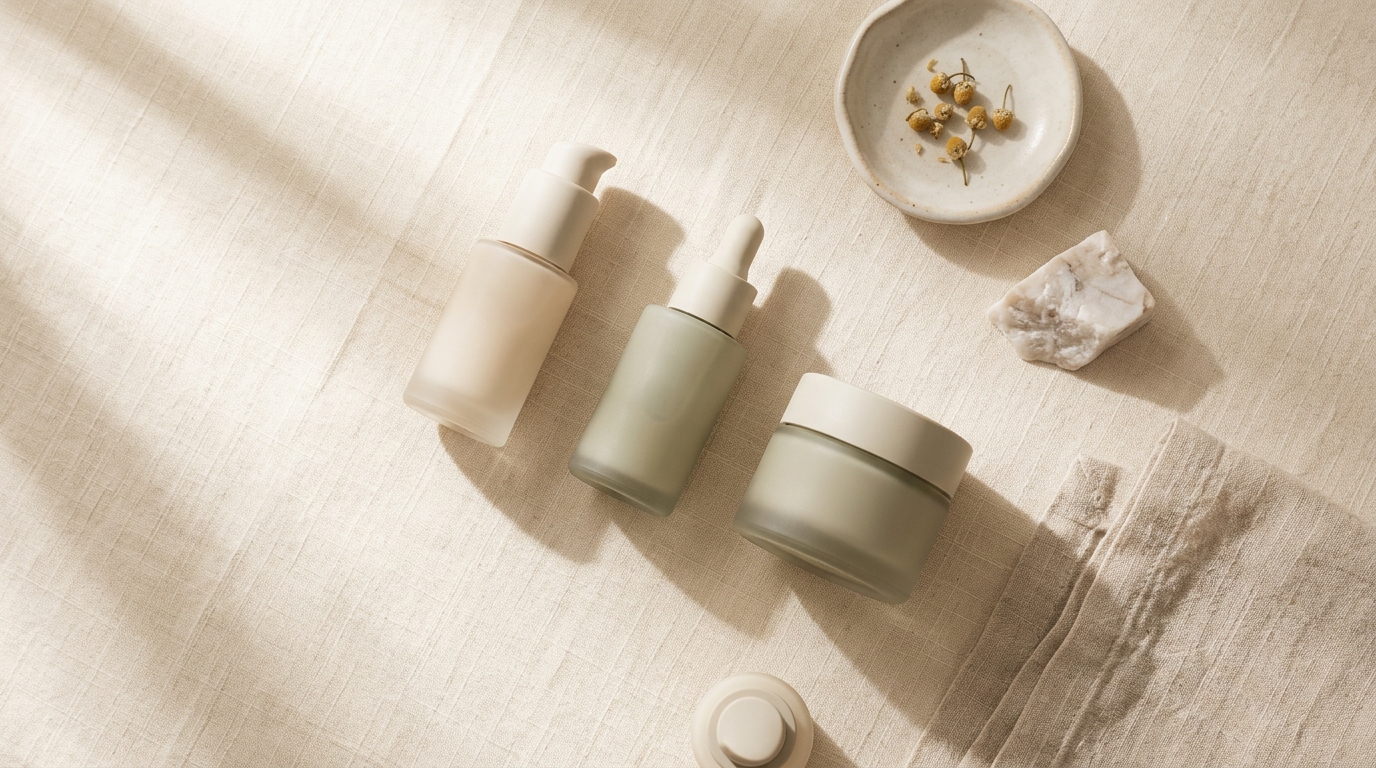
An affordable clean skincare routine costs less than one bottle of a cult-favorite serum. A three-step lineup of a gentle cleanser, a vitamin C serum, and a moisturizer with SPF-boosting antioxidants runs about $73 total, compared to $200+ for comparable clean beauty routines from prestige brands. The formulas matter more than the price tag.
Clean beauty marketing has convinced a lot of people that efficacy requires a $58 serum. It doesn't. What actually drives results is the concentration and stability of active ingredients like L-ascorbic acid, niacinamide, and peptides, not the brand's price positioning or packaging design. Below is a full routine, priced out, with the reasoning behind every step.
What does an affordable clean skincare routine actually include?
At minimum, a functional routine needs three things: a cleanser that removes debris without stripping the acid mantle, a treatment serum with an active ingredient backed by research, and a moisturizer that reinforces the skin barrier. Anything beyond that (essences, toners, seven-step routines) is optimization, not necessity.
- Cleanser: removes sunscreen, sweat, and sebum without disrupting the skin's pH (ideally 4.5-5.5)
- Treatment serum: delivers an active ingredient in a stable, absorbable form
- Moisturizer: locks in humectants and reinforces the lipid barrier with emollients and occlusives
The $73 routine: what's in it and why
This lineup uses FoamCleanse: Gentle Daily Face Wash ($13), Radiant Boost Vitamin C Serum ($30), and GlowGuard Anti-Aging Cream ($30). Total: $73.
FoamCleanse is formulated without sodium lauryl sulfate, the surfactant most responsible for over-drying and barrier disruption in budget cleansers. Instead it relies on milder coco-glucoside-type surfactants that clean effectively at a lower pH. This matters because a cleanser that strips lipids forces your skin to overproduce sebum, which can undo whatever your serum is trying to accomplish.
The vitamin C serum uses L-ascorbic acid, the form with the most research behind it for collagen synthesis and pigment inhibition, though it's also the least stable form and needs to be stored away from light and heat. If you want the full breakdown of how this form compares to derivatives like sodium ascorbyl phosphate, we cover it in Natural vs Synthetic Vitamin C Serum: What Absorbs?
GlowGuard closes the routine with barrier-supporting emollients and antioxidant compounds that help neutralize free radical damage from UV and pollution exposure throughout the day. It's not a sunscreen replacement, but it does complement one.
How does this compare to a prestige clean beauty routine?
A comparable three-step routine from Drunk Elephant (their C-Firma Day Serum, Protini Polypeptide Cream, and Jelly Cleanser) runs over $200 before tax. The ingredient categories overlap significantly with what's listed above; the price difference reflects marketing spend, packaging, and retail markup far more than it reflects formulation superiority.
| Step | Budget clean routine | Prestige clean routine |
|---|---|---|
| Cleanser | FoamCleanse ($13) | Jelly Cleanser ($34) |
| Serum | Radiant Boost Vitamin C ($30) | C-Firma Day Serum ($80) |
| Moisturizer | GlowGuard ($30) | Protini Polypeptide Cream ($68) |
| Total | $73 | $182+ |
What does the morning version of this routine look like?
- Cleanse with FoamCleanse using lukewarm water, 30-45 seconds, no scrubbing
- Pat skin damp, not dry, before applying serum (this improves absorption)
- Apply 3-4 drops of Radiant Boost Vitamin C Serum, focusing on areas with pigmentation or dullness
- Wait 60 seconds, then apply GlowGuard Anti-Aging Cream
- Follow with a mineral or chemical SPF 30+, which is not optional if you're using vitamin C
What does the evening version look like?
- Double cleanse if you wore sunscreen or makeup: an oil-based cleanser first, then FoamCleanse
- Skip vitamin C at night if your skin is sensitive; it's most useful for daytime antioxidant protection
- Apply GlowGuard alone, or layer a heavier occlusive over it if your skin runs dry
- Consider introducing a retinol alternative two to three nights a week once your barrier is stable
If you eventually want to add a fourth step, a natural retinol alternative for sensitive skin is a logical next addition, since retinoid tolerance typically needs to be built gradually anyway.
Is a minimalist routine actually better for your skin?
There's a legitimate case that more steps introduce more risk of irritation, product conflict, and wasted money on redundant actives. This is the core argument behind the skinimalism movement, which we go into in more depth in Skinimalism: The 3-Step Natural Skincare Routine 2026. A three-product routine done consistently for eight to twelve weeks will usually outperform a nine-product routine done inconsistently.
Where can you save even more without cutting corners?
If $73 is still above budget, the cleanser is the easiest place to economize further, since it spends the least time on skin. The serum is the worst place to cut, because active ingredient concentration and stability are exactly what you're paying for. If you want to compare formulation quality against ingredients to avoid entirely, see 7 Body Wash Ingredients to Avoid for the same logic applied to cleansers.
FAQ
Can a $73 skincare routine really work as well as a $200 one?
Yes, when the formulas contain comparable concentrations of the same active ingredients. Price often reflects marketing and packaging costs rather than clinical efficacy, so comparing INCI lists is more useful than comparing price tags.
What's the single most important product to not skimp on?
The treatment serum, since it's where concentrated actives like vitamin C or peptides do the real work. Cleansers and moisturizers have more room for budget flexibility because they spend less contact time on skin.
How long before I see results from an affordable clean skincare routine?
Most people notice improved texture and hydration within two to four weeks, while changes in pigmentation or fine lines from vitamin C typically take eight to twelve weeks of consistent use. Consistency matters more than price point.
Do I need a separate sunscreen if I'm using vitamin C serum?
Yes, vitamin C enhances your skin's own antioxidant defenses but does not block UV rays, so it should always be paired with a mineral or chemical SPF 30 or higher during the day.
Should I do a 3-step routine or add more products over time?
Start with three steps for at least a month to establish a baseline and confirm tolerance. Add one new product at a time afterward, such as a retinol alternative or peptide serum, so you can identify what's actually working.
