

Posted by nuréo Skincare
on October 14, 2026
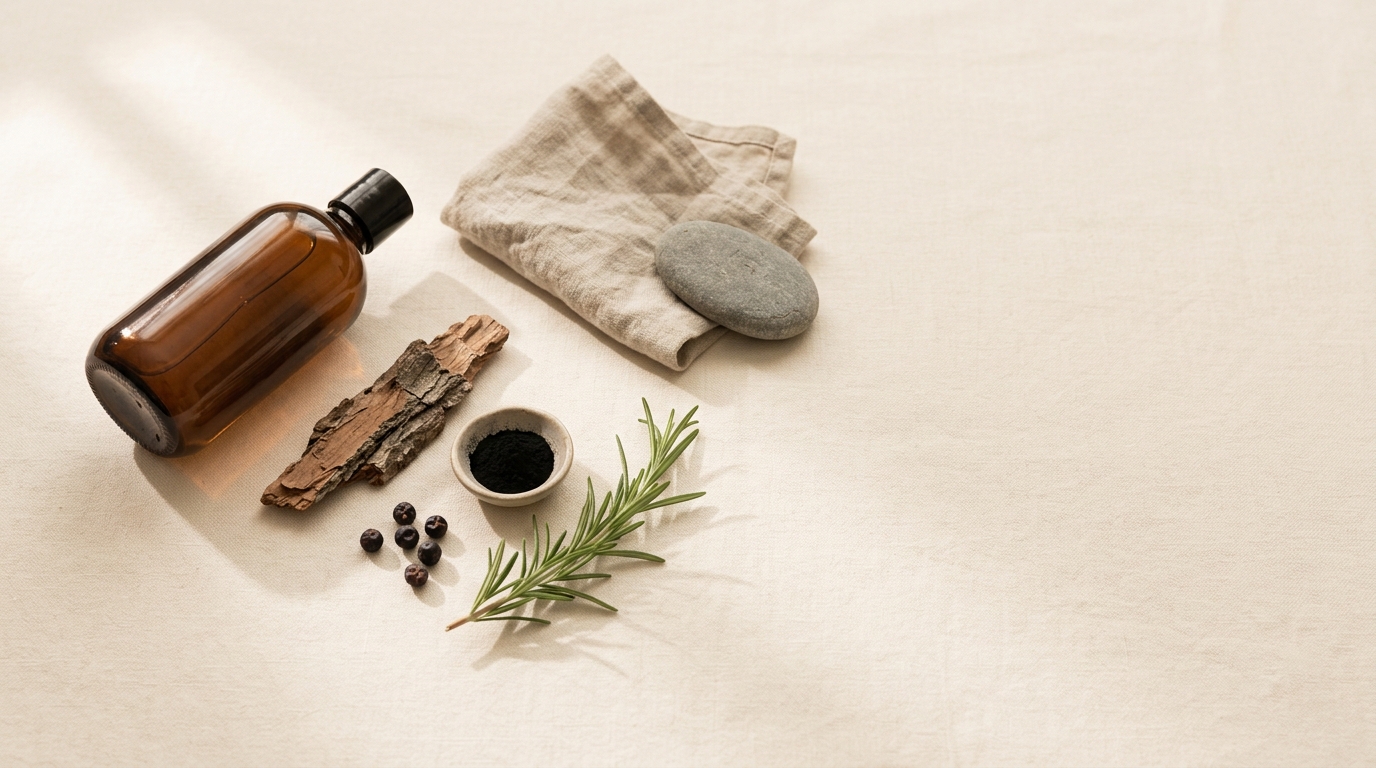
The best ingredients in men's body wash are gentle surfactants like sodium cocoyl isethionate or decyl glucoside, skin-barrier support from glycerin or shea butter, and functional actives such as activated charcoal, tea tree oil, or cedarwood extract. Together these clean effectively without stripping skin, control odor, and avoid the irritation common with sulfate-heavy formulas.
Most men pick body wash by scent alone. That's a problem, because the ingredient list is what actually determines whether your skin feels tight and flaky an hour after your shower or stays comfortable all day. Men's skin also produces roughly 25% more sebum than women's skin on average, which changes what a well-formulated wash needs to do.
What makes a surfactant "good" for men's skin?
A surfactant is the ingredient that does the actual cleaning, it grabs oil and dirt and rinses them away with water. The problem is that aggressive surfactants don't know the difference between dirt and your skin's own protective lipids, so they strip both.
Sodium lauryl sulfate (SLS) is the classic offender. It's cheap, foams aggressively, and can increase transepidermal water loss (TEWL), which is a measurable sign of a compromised skin barrier. Sodium laureth sulfate (SLES) is milder but still harsh on skin that's already prone to razor burn or chest acne.
Gentler alternatives include:
- Sodium cocoyl isethionate (SCI): derived from coconut, creates a creamy lather, and is one of the mildest anionic surfactants available
- Decyl glucoside: a sugar-based surfactant that's non-irritating and biodegradable
- Cocamidopropyl betaine: a secondary surfactant that boosts foam and reduces the harshness of primary surfactants
If you want a deeper breakdown of this exact tradeoff, we covered it in Sulfate-Free Body Wash: Why It's Better for Your Skin.
Which moisturizing ingredients actually prevent dryness?
Cleansing always removes some lipids, so a well-formulated wash replaces moisture at the same time. Look for humectants and emollients listed in the first half of the ingredient list, not buried at the bottom.
Glycerin is the workhorse here. It's a humectant, meaning it pulls water from the air and deeper skin layers into the surface. Shea butter and cocoa butter act as emollients, filling gaps between skin cells to reduce roughness.
Panthenol (pro-vitamin B5) is another one worth knowing. Research suggests it supports barrier repair and has a mild anti-inflammatory effect, which matters if you're shaving your chest, back, or face shortly after showering.
What ingredients help control body odor naturally?
Body odor comes from bacteria metabolizing sweat, not sweat itself. A smart formula addresses the bacteria or the sweat byproducts, not just masks them with fragrance.
- Activated charcoal: adsorbs surface oils and debris, which can reduce the environment bacteria feed on
- Tea tree oil (melaleuca alternifolia): contains terpinen-4-ol, a compound with documented antimicrobial activity against odor-causing bacteria
- Zinc PCA: regulates sebum production and has mild antibacterial properties
- Witch hazel (hamamelis virginiana): a natural astringent that tightens pores and controls excess oil
Cedarwood deserves its own mention. Beyond the warm, woodsy scent, cedrol (the active compound in cedarwood oil) has shown antimicrobial properties in lab studies. That's part of why it's a popular base note in men's natural body wash, including our own Fresh Cedar Wash for Hands & Body.
Natural vs synthetic ingredients: does it actually matter for performance?
Here's the honest answer: not always. A well-formulated synthetic surfactant can be milder than a poorly formulated "natural" one. What matters more is the specific ingredient, not the category it falls into.
That said, natural essential oils tend to bring secondary benefits (antimicrobial, anti-inflammatory) that synthetic fragrance can't replicate. Synthetic fragrance ('parfum' on a label) is also a top cause of contact dermatitis, since it can contain dozens of undisclosed compounds.
| Surfactant Type | Cleansing Power | Barrier Impact | Best For |
|---|---|---|---|
| Sulfates (SLS/SLES) | Very high | Can strip lipids, raise TEWL | Heavy grease or oil removal |
| Amino acid/isethionate (SCI) | Moderate to high | Low irritation, pH-friendly | Daily use, sensitive skin |
| Sugar-based (glucosides) | Moderate | Very low irritation | Dry, reactive, or shaving-prone skin |
Which ingredients should you avoid in men's body wash?
Some ingredients persist in budget formulas simply because they're cheap, not because they're good for skin. Watch for these on the label:
- Triclosan: an antibacterial banned from hand soaps by the FDA in 2016 over safety concerns, though it still appears in some body washes
- Parabens (methylparaben, propylparaben): preservatives linked to endocrine disruption concerns in some research
- Synthetic dyes (FD&C Blue 1, Red 40): purely cosmetic, no functional benefit, and a common irritant trigger
- Phthalates: often hidden inside "fragrance" and linked to hormone disruption in animal studies
For a full breakdown with label examples, see 7 Body Wash Ingredients to Avoid (And What Clean Labels Look Like).
How should men build a routine around a clean body wash?
The wash itself is only half the equation. Water temperature, towel-drying habits, and what you apply afterward all affect how your skin handles a new formula.
- Shower with lukewarm, not hot, water, since hot water accelerates lipid stripping
- Apply body wash with hands rather than a loofah to reduce microtearing on sensitive areas
- Pat skin dry instead of rubbing
- Apply a lightweight moisturizer within 3 minutes while skin is still slightly damp
If you're building out a full natural routine, our guide on How Do You Choose Men's Body Washes With Natural Formulas? walks through matching products to skin type. And if lather is your main hesitation about switching, we addressed that directly in Natural Men's Body Wash That Still Lathers Well?
For something with a warmer, spice-forward profile instead of cedar, the Spice Cleanse Hand & Body Wash uses the same mild surfactant base while swapping the scent profile.
FAQ
Is sulfate-free body wash as effective as regular body wash for men?
Yes, for everyday dirt, sweat, and sebum, sulfate-free surfactants like SCI or decyl glucoside clean effectively without the harsh stripping of SLS. The lather is usually less dramatic, but lather volume isn't actually correlated with cleaning power.
What's the best ingredient for body odor control in a natural body wash?
Tea tree oil and zinc PCA are the two with the most consistent research behind their antibacterial and sebum-regulating effects. Activated charcoal helps by adsorbing surface oils, though its odor-fighting reputation is more about marketing than hard mechanism.
Can natural body wash ingredients cause breakouts on the back and chest?
Rarely, since most natural oils used in body wash rinse off and don't stay on skin long enough to clog pores the way leave-on products can. If breakouts do occur, coconut oil derivatives and heavy butters are the usual suspects worth eliminating first.
How often should men switch body wash formulas?
There's no required switching schedule, skin doesn't build tolerance to a good formula the way it can to actives like retinol. Switch only if you notice dryness, irritation, or if a seasonal change in humidity calls for a richer or lighter formula.
Are fragrance oils in natural body wash safe for sensitive skin?
Essential oil blends are generally better tolerated than synthetic fragrance, but they're not risk-free, citrus oils in particular can cause photosensitivity in rare cases. Patch test on your inner arm for 24 hours before using any new scented formula on sensitive areas.
