

Posted by nuréo Skincare
on September 09, 2026
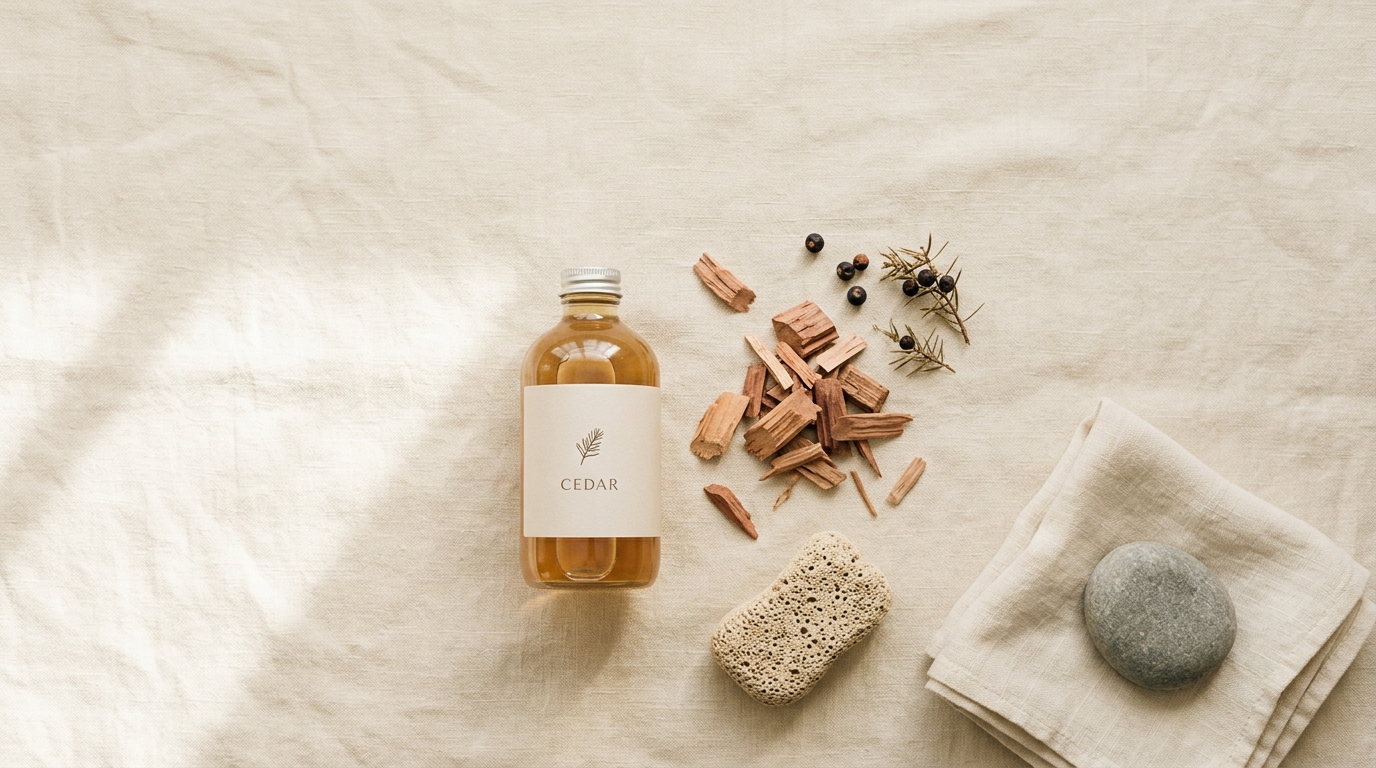
Cedar body wash is a body cleanser formulated with cedarwood oil (typically Cedrus atlantica or Juniperus virginiana) combined with mild surfactants that clean skin while leaving behind a warm, woody scent. It works well for normal to dry skin, offers subtle antimicrobial properties from naturally occurring sesquiterpenes like cedrol, and is best used as a daily cleanser rather than a treatment for active skin conditions like eczema or acne.
If you searched for this term, you're probably trying to figure out whether cedar body wash is just a marketing scent or an ingredient with real function. It's a fair question, and the honest answer is: a bit of both. Let's break down what's actually happening in the bottle.
What is cedar body wash made from?
A genuine cedar body wash starts with a cedarwood oil, listed on the label by its INCI name, such as Cedrus atlantica bark oil or Juniperus virginiana wood oil. These are two different botanical sources, both marketed as "cedarwood," and both contain similar sesquiterpene compounds like cedrol and thujopsene that give the oil its dry, woody aroma.
The rest of the formula is what determines whether the wash actually cleans well and treats your skin gently. Look for:
- Coco-glucoside or decyl glucoside · plant-derived, sulfate-free surfactants that clean without stripping the skin barrier
- Glycerin · a humectant that pulls moisture into the skin during the wash
- Aloe barbadensis leaf juice · soothes and calms as the cedarwood scent develops
- Cedrus atlantica bark oil or Juniperus virginiana wood oil · the actual scent and mild antimicrobial component
Our own Fresh Cedar Wash for Hands & Body is built on this exact structure: sulfate-free glucoside cleansers carrying real cedarwood oil, not a synthetic fragrance oil designed to smell like cedar without any of the plant's actual chemistry.
What does cedarwood do for skin?
Cedarwood oil's primary active compounds, cedrol and thujopsene, have been studied in vitro for mild antimicrobial and anti-inflammatory activity. This doesn't mean cedar body wash treats acne or infections, but it does suggest the oil isn't purely decorative from a skin-science standpoint.
Cedrol also has documented calming effects when inhaled, which is part of why cedar-scented products are marketed for evening or "grounding" rituals rather than energizing morning routines. The scent itself does real psychological work, even if the topical skin benefit is modest.
What cedarwood oil does not do is exfoliate, brighten, or repair a damaged moisture barrier. If you need those functions, you're looking at a different ingredient category entirely, like the retinaldehyde alternatives covered in our natural retinol alternatives guide.
Is cedar body wash good for sensitive skin?
Essential oils, including cedarwood, are a known category of fragrance allergens, meaning a small percentage of people will react to them regardless of how "natural" the source is. Sensitive or reactive skin should patch test any new cedar body wash on the inner forearm for 24 to 48 hours before full use.
That said, cedarwood oil is generally considered lower-risk than stronger sensitizers like cinnamon bark or clove oil. A well-formulated cedar wash that pairs the oil with soothing ingredients like oat extract or panthenol, and skips sulfates like sodium lauryl sulfate, tends to be tolerated well by most skin types.
For a full rundown of what to avoid in any body wash, sensitive skin or not, see our guide on body wash ingredients to avoid.
Cedar body wash vs synthetic musk body wash: what's the real difference?
| Feature | Cedar Body Wash (Natural) | Synthetic Fragrance Body Wash |
|---|---|---|
| Scent source | Cedrus atlantica or Juniperus virginiana oil | Lab-formulated fragrance compounds, often undisclosed |
| Skin interaction | Mild antimicrobial and calming sesquiterpenes | Typically inert; scent only, no bioactivity |
| Scent longevity | Softer, fades within a few hours | Often stronger and longer-lasting on skin |
| Allergen transparency | Labeled by INCI name, easier to identify | Often hidden under "parfum" or "fragrance" |
| Typical surfactant base | Glucoside-based, sulfate-free | Varies, frequently sulfate-based |
Neither option is universally "better." If you want a stronger, longer-lasting scent and don't have fragrance sensitivities, a synthetic formula may perform fine. If you want transparency about what's actually in the bottle and a milder skin experience, cedar body wash with disclosed INCI ingredients is the more honest choice.
How do you use cedar body wash correctly?
- Wet skin with warm, not hot, water. Hot water strips natural lipids and makes any wash feel more drying than it actually is.
- Dispense a dime-sized amount onto a washcloth, loofah, or directly into palms.
- Massage in circular motions for 20 to 30 seconds to allow the glucoside surfactants time to lift oil and debris without over-scrubbing.
- Rinse thoroughly and pat, don't rub, skin dry.
- Follow with a body oil or lotion within three minutes of stepping out, while skin is still slightly damp, to lock in the humectants left behind by the wash.
Cedar body wash pairs particularly well as a shower step before a rosemary-based hair ritual, like the one outlined in our rosemary oil scalp massage guide, since both scents are grounding rather than competing.
What ingredients should you avoid in a cedar body wash?
- Sodium lauryl sulfate (SLS) · an aggressive surfactant that can strip the skin barrier and worsen dryness over time
- Synthetic musk compounds layered on top of "cedar" fragrance to mask a weak or absent cedarwood oil content
- Parabens (methylparaben, propylparaben) · preservatives some formulators avoid due to potential endocrine activity, though regulatory bodies still consider low concentrations safe
- Undisclosed "parfum" or "fragrance" listed as the only scent ingredient, which makes it impossible to know if real cedarwood oil is present at all
If a cedar body wash lists cedarwood as the very last ingredient before preservatives and colorants, it likely contains only trace amounts, enough for a legal label claim, not enough to do anything for your skin. For more on decoding labels, our sulfate-free body wash guide covers this in depth.
If you're shopping for someone who prefers a warmer, spicier profile instead of straight woodsy cedar, our Amber Hand & Body Wash and Spice Cleanse Hand & Body Wash use a similar glucoside base with different botanical notes, both covered in more detail in our amber body wash breakdown.
FAQ
Does cedar body wash help with body acne or fungal issues?
Cedarwood oil's sesquiterpenes have shown mild antimicrobial activity in lab studies, but a body wash isn't formulated or tested as a treatment for acne or fungal conditions. If you're dealing with persistent breakouts on the body, talk to a dermatologist about a targeted treatment rather than relying on scent-based cleansers.
Is cedar body wash safe to use every day?
Yes, most cedar body washes built on gentle glucoside surfactants are gentle enough for daily use, unlike sulfate-heavy formulas that can be drying with repeated use. Still, patch test first if you have known fragrance sensitivities, since essential oils remain a common allergen category.
Why does my cedar body wash smell weak compared to the bottle's description?
Natural cedarwood oil produces a softer, more diffuse scent than synthetic fragrance oils, and it fades faster on skin, usually within a few hours. This is normal and expected, it simply reflects that you're smelling an actual plant extract rather than an engineered long-lasting fragrance compound.
Can men and women use the same cedar body wash?
Cedar body wash isn't gendered by formulation, cedarwood oil simply has a warm, woodsy profile that many people of any gender enjoy. If you're specifically looking for men's formulas, our best natural body wash for men guide covers additional considerations like scent strength and skin thickness.
What's the difference between cedarwood essential oil and cedarwood fragrance oil in a body wash?
Cedarwood essential oil is steam-distilled or cold-pressed directly from the wood and retains the plant's natural compounds like cedrol. Cedarwood fragrance oil is a synthetic or partially synthetic blend designed to mimic the scent, often without any of the original bioactive compounds, so check the ingredient list for the specific INCI botanical name if authenticity matters to you.
